

Accepting online payments helps small businesses reach more customers, but setting up the right payment process can be challenging. From payment preferences and costs to security and gateway selection, several factors need to be considered. This step-by-step guide explains how to set up online payments, what to consider when choosing a payment gateway, and the key points businesses should keep in mind when building their payment infrastructure.
05 Steps to start accepting online payment for small businesses
Accepting online payments does not necessarily require a complicated technical setup. The following steps provide a practical starting point for businesses that want to accept payments online efficiently and securely.
Understand your customers and payment journey
Before choosing a payment provider, businesses should first consider how customers will make their purchases. This includes identifying whether sales take place through an e-commerce website, mobile application, social media, payment links, or other digital channels. Businesses should also consider where their customers are located, whether they mainly sell domestically or internationally, and which payment methods their target audience is most likely to use.
Understanding the customer journey makes it easier to determine which payment capabilities are actually needed. For example, a business selling internationally may require multi-currency support and local payment methods, while a service-based business may benefit from a simple payment link or QR payment option. Instead of selecting a payment solution based only on its features, businesses should choose one that fits how their customers prefer to pay.
Prepare your online sales environment
Before starting the onboarding process with a payment provider, businesses should ensure that their online sales environment provides clear and accurate information. Customers should be able to understand what they are purchasing, how much they will pay, and where they can find information about refunds, cancellations, or customer support. This is particularly important for businesses selling through websites or other digital channels where customers cannot directly speak with a salesperson.
A transparent sales environment can help build trust while reducing customer confusion and unnecessary payment disputes. Clear product descriptions, visible pricing, accessible contact information, and straightforward policies all contribute to a smoother customer experience. Preparing these elements in advance can also make the payment onboarding process more efficient and create a stronger foundation for long-term payment operations.
Choose the right integration and payment methods
The next step is deciding how customers will complete their payments. Businesses with more advanced technical resources may prefer API integration that provides greater control over the checkout experience, while smaller teams may benefit from simpler options such as hosted payment pages, payment links, or QR payments. The right choice should depend on the business's technical capabilities and the type of customer experience it wants to provide.
Payment methods are equally important. While cards may be essential for some customers, others may prefer digital wallets, bank transfers, QR payments, or local payment solutions. Offering relevant payment options can reduce checkout friction and make it easier for customers to complete a purchase. As the business grows, flexible integration and payment method options can also make it easier to add new sales channels or enter new markets.
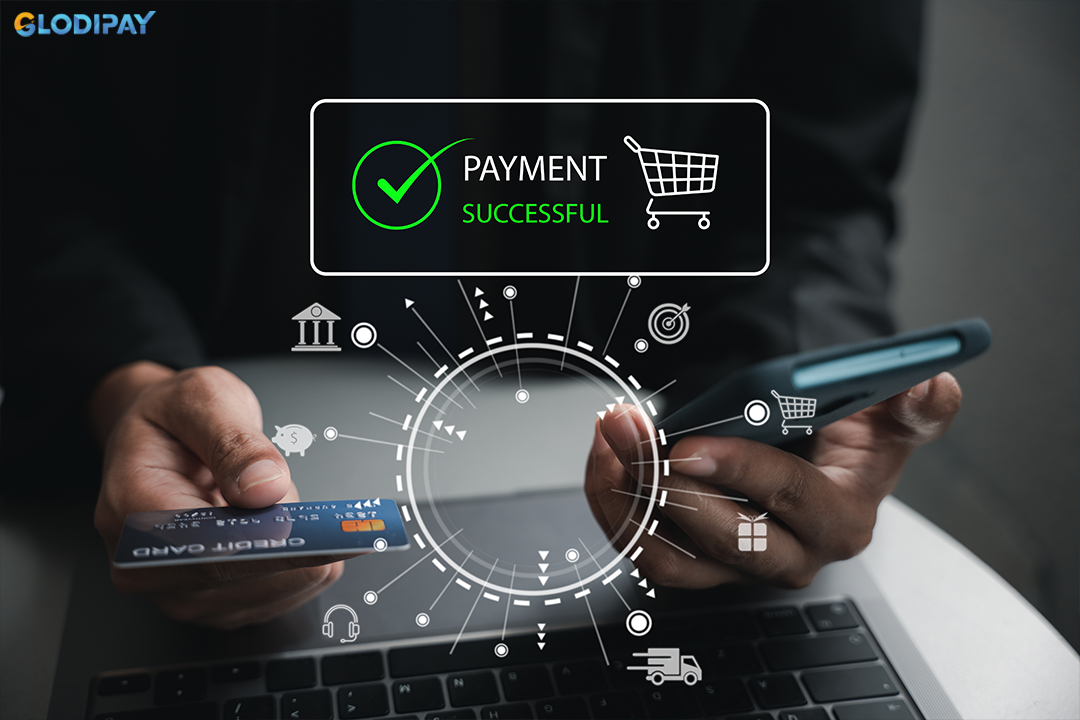
A successful online payment setup starts with choosing suitable payment methods
Set up security and test the payment experience
Security should be considered from the beginning rather than only after payment problems occur. Depending on the payment provider and business model, useful capabilities may include 3D Secure authentication, encryption, tokenisation, fraud monitoring, and suspicious transaction controls. These features can help businesses protect transactions and reduce exposure to unauthorised activity or payment-related fraud.
Before launching, businesses should also test the complete payment journey from the customer's perspective. This includes checking the checkout process on different devices, reviewing successful and failed transactions, confirming that payment notifications work correctly, and ensuring customers can easily understand what to do if they need support or a refund. A payment process that is technically functional but confusing or difficult to use can still result in abandoned purchases and customer dissatisfaction.
Monitor and optimise payment performance
Accepting payments online is not a one-time setup process. Once the system is live, businesses should monitor transaction activity to understand how well their payment process is performing. Important indicators may include successful payment rates, failed transactions, refunds, chargebacks, and suspicious activity, as these can reveal potential technical, operational, or customer experience issues.
Regular monitoring allows businesses to identify patterns and make improvements before small problems become larger ones. For example, repeated transaction failures may indicate a technical issue, while an increase in payment disputes may suggest unclear customer communication or fulfilment problems. By reviewing payment performance over time, small businesses can continuously improve their operations and maintain a smoother payment experience as transaction volumes grow.
How to choose the right payment gateway for your small business
Choosing a payment gateway is an important decision that affects both the customer experience and a business’s ability to manage payments and scale as transaction volumes grow.
Payment methods and international coverage
A payment gateway should support the methods that are most relevant to the business's customers. Depending on the target market, this may include credit and debit cards, digital wallets, bank transfers, QR payments, or local payment methods. Customers are more likely to complete a purchase when they can use a familiar and convenient payment option.
Businesses planning to sell internationally should also consider the provider's geographic coverage and multi-currency capabilities. Payment preferences often differ between countries, so relying on a limited number of payment options may create unnecessary friction for international customers. A gateway with broader payment coverage can make it easier to support new markets without needing to rebuild the payment infrastructure.
Fraud protection and reliability
Online payment security should be a priority for businesses of all sizes. When comparing providers, businesses should consider features such as PCI DSS compliance, 3D Secure authentication, encryption, tokenisation, and fraud monitoring. These capabilities can help protect payment information and identify suspicious transactions before they create more serious financial or operational problems.
Reliability is equally important because failed or disrupted payments can directly affect sales and customer trust. Businesses should consider how easily they can monitor transaction activity, manage payment issues, and receive support when problems occur. A reliable payment gateway should provide businesses with both secure processing and sufficient visibility over their payment performance.
Online payment security is one of the top priorities for businesses of all sizes
Pricing and scalability
Businesses should understand the complete pricing structure before choosing a payment gateway. In addition to standard transaction fees, potential costs may include currency conversion, cross-border transactions, refunds, chargebacks, or additional payment services. Looking at the overall cost structure can help businesses avoid unexpected expenses and make a more accurate comparison between providers.
The payment solution should also be easy to integrate and flexible enough to support future growth. Businesses may eventually need additional payment methods, new currencies, higher transaction volumes, or different sales channels. Choosing a scalable gateway from the beginning can reduce the need to replace the entire payment system as the business expands.
How GLODIPAY helps small businesses accept payments online
For small businesses, managing different payment methods, international transactions, security requirements, and sales channels can become increasingly complex. Instead of relying on separate solutions for different payment needs, businesses can benefit from a payment infrastructure that provides greater flexibility and supports growth across multiple markets.
GLODIPAY helps businesses accept payments through a global payment infrastructure supporting transactions in more than 173 countries with multiple currencies and multiple payment methods, including international cards, digital wallets, bank transfers, QR payments, and local payment solutions. Flexible integration options, such as API integration and payment links, allow businesses to create payment experiences that fit their existing sales channels while remaining ready to expand into new markets.
Security and risk management are equally important, especially for businesses operating in more complex payment environments. GLODIPAY supports 3D Secure authentication, along with fraud monitoring and other security technologies to help protect transactions and reduce payment-related risks. Beyond standard payment processing, GLODIPAY also supports high-risk industries such as online gaming, travel, financial services, and digital businesses, providing a flexible payment infrastructure designed to support both domestic operations and international growth.

GLODIPAY supports transactions in more than 173 countries with multiple payment methods
Accepting online payments requires balancing customer convenience, security, costs, and the flexibility to grow. By choosing the right payment gateway, small businesses can build a reliable payment infrastructure that supports both daily operations and future expansion. Contact GLODIPAY today to discover how our flexible, secure, and global payment solutions can help your business accept payments with confidence and grow across new markets.