

Global payment gateways enable international businesses to manage payments more efficiently by simplifying the complexities of cross-border commerce. Companies expanding internationally face multiple challenges: currency fluctuations, local regulatory requirements, diverse payment methods, and operational scalability. A modern global payment gateway transforms this complexity into a streamlined, secure, and automated system. It enables businesses to optimize cash flow, maintain compliance, reduce fraud risk, and provide seamless payment experiences for customers worldwide.
The growing complexity of cross-border payments
Operating internationally introduces new layers of complexity compared to domestic operations. Businesses must navigate fragmented banking infrastructures, diverse payment preferences, currency volatility, and varying regulatory frameworks.
Diverse payment preferences across regions
Consumers around the world prefer different payment methods: credit and debit cards, mobile wallets, bank transfers, QR payments, and even cash-on-delivery in certain markets. Failing to accommodate local preferences can lead to high cart abandonment rates. A global payment gateway centralizes these options, allowing businesses to offer localized payment experiences without integrating each method separately.
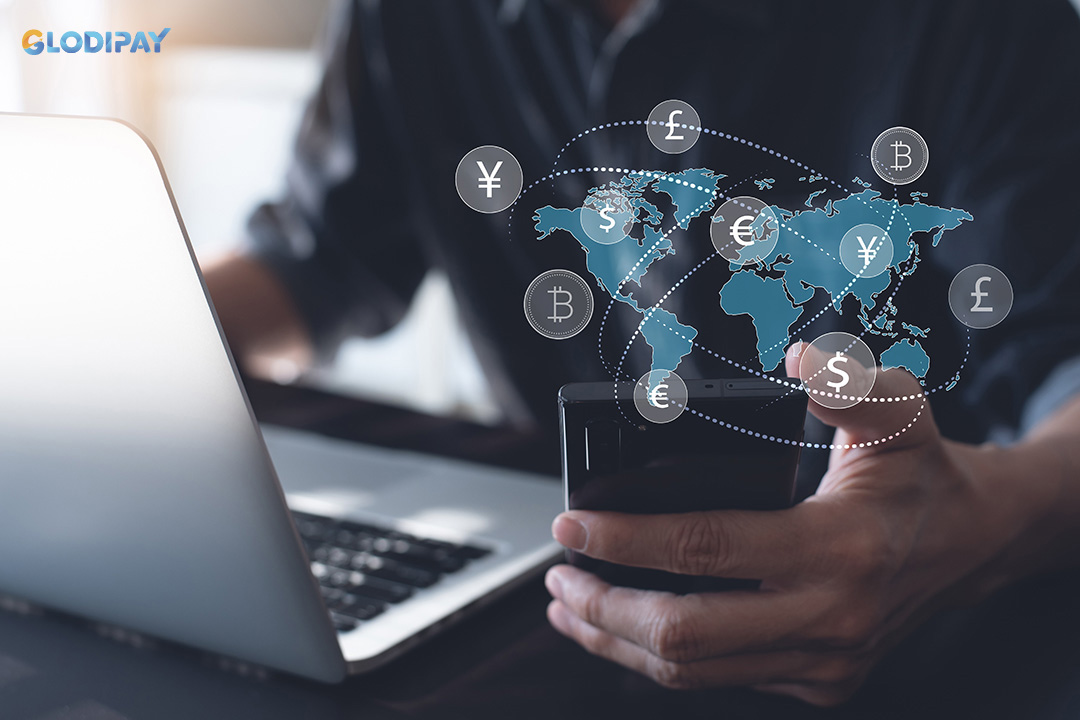
Global payment gateways centralize diverse local payment methods, helping businesses reduce cart abandonment and offer seamless, region-specific checkout experiences
Currency and settlement challenges
Handling multiple currencies exposes businesses to foreign exchange risk and additional processing fees. Global payment gateways automate currency conversion, provide real-time exchange rates, and enable flexible settlement options in preferred currencies. This reduces financial uncertainty and simplifies treasury management for global finance teams.
Regulatory and compliance considerations
Every country enforces unique rules regarding AML (Anti-Money Laundering), KYC/KYB (Know Your Customer/Know Your Business), taxation, data privacy, and transaction limits. Global payment gateways embed compliance measures into their platform, allowing merchants to operate in multiple jurisdictions without navigating these requirements manually, thus mitigating legal risks.
Global payment gateways ensure AML, KYC/KYB, and tax compliance, letting merchants operate globally with minimal legal risk
How global payment gateways streamline payment management
Global payment gateways act as an orchestration layer between merchants and the fragmented world of banks, card networks, and local payment providers.
Multi-currency processing and treasury optimization
Accepting local currencies at checkout increases customer trust and conversion. Global payment gateways simplify this by supporting multiple currencies, real-time FX conversion, flexible settlement, and clear revenue reporting. By consolidating currency management, gateways reduce unexpected FX losses, streamline accounting operations, and stabilize revenue across international markets. It’s allow finance teams to focus on strategic growth instead of manual currency handling.
Consolidated reporting, reconciliation, and fraud prevention
Global payment gateways centralize financial data from multiple banks, processors, and payment methods into a single unified system. They provide real-time dashboards, detailed transaction metadata, automated reconciliation of settlements, fees, refunds, and chargebacks, along with API access for ERP and accounting integration. At the same time, these platforms implement multiple layers of security, including tokenization, 3D Secure authentication, machine learning-based fraud detection. These measures reduce errors, prevent fraud, increase customer confidence, and minimize operational workload.

Global payment gateways unify financial data, automate reconciliation, enhance security, and provide real-time insights to reduce errors, prevent fraud, and streamline operations
Optimized checkout and dispute management
A seamless checkout experience is critical for conversion. Global payment gateways enhance it through one-click payments, tokenized cards, and localized currency and language options. They also use smart routing to maximize authorization rates and feature a responsive, mobile-first design. Gateways also automate refunds, chargebacks, and dispute handling, offering structured workflows, automatic reconciliation of disputed amounts, and analytics to identify high-risk regions or products. This reduces manual intervention, mitigates revenue loss, and ensures a smooth, secure experience for both merchants and customers.
Infrastructure scalability and global expansion support
Scalable infrastructure enables businesses to expand globally with ease. Payment gateways support rapid market entry by allowing developers to integrate APIs or SDKs just once, instantly enabling operations in multiple countries. This significantly reduces time-to-market from months to days, helping businesses seize new opportunities quickly and stay competitive in a fast-moving global landscape.
They also provide plug-and-play access to hundreds of local payment methods, removing the need for separate agreements with each provider. In addition, built-in compliance ensures businesses can operate legally across multiple regions without requiring dedicated teams for every jurisdiction, minimizing risks and allowing merchants to focus on growth and customer experience.

Scalable payment gateways enable fast global expansion with easy integration, local payment support, and built-in compliance
Automation and operational efficiency
Automation is at the core of modern payment gateways, driving operational efficiency by improving speed, reducing costs, and minimizing errors. Gateways enable automated payouts and settlement flows, allowing businesses to schedule recurring or event-triggered payments to vendors, partners, or freelancers. They support multi-currency settlements, provide transparent fee reporting, and automate reconciliation, significantly reducing manual effort and streamlining financial operations.
locations, and risk levels. It then routes payments through the optimal path, minimizing declines and maximizing revenue. Automated compliance screening ensures that AML, KYC, KYB, and tax requirements are met across all markets. It allows businesses to scale confidently while maintaining full regulatory adherence.
GLODIPAY - A global payment gateway for international businesses
GLODIPAY is a global payment gateway built for high-growth international enterprises. We operate in over 173 countries, supporting multi-currency transactions and a wide range of payment methods, including cards, bank transfers, e-wallets, and QR payments. Its infrastructure ensures high authorization rates, optimized settlement, and reliable processing across global markets.
With fast KYB approval, GLODIPAY enables businesses to enter new markets quickly. It is specifically designed for high-risk industries such as AI platforms, travel services, and e-learning. Advanced features include 3D Secure authentication, real-time fraud monitoring, and smart routing logic, ensuring secure, compliant, and scalable payment operations.

GLODIPAY is a global payment gateway enabling secure, multi-currency transactions and fast market entry for high-growth, high-risk businesses across 173+ countries
Global payment gateways enable international businesses to manage payments by centralising multi-currency processing and automating reconciliation. They also enhance fraud protection, embed compliance across jurisdictions, and reduce operational complexity while improving conversion rates. By providing the visibility needed to scale confidently, a robust gateway becomes a strategic tool that directly impacts revenue, customer satisfaction, and global growth. Contact GLODIPAY today to streamline your international payments and expand your business worldwide.