

Global eCommerce is expanding faster than ever, but cross-border payments remain one of the biggest operational challenges for international businesses. Different currencies, regional regulations, fraud risks, and payment preferences can create friction that directly impacts revenue growth. To solve these challenges, businesses increasingly rely on global payment gateways and offshore merchant infrastructure to support seamless global transactions. In 2026, payment flexibility and global settlement capabilities are no longer optional. They are essential for businesses that want to scale internationally with stability and efficiency.
The growing complexity of cross-border payments
As global commerce expands, businesses must navigate a far more complicated payment ecosystem than domestic operations. Every new market introduces different financial expectations, regulations, and transaction risks.
Why global expansion creates payment challenges
International customers expect localized payment experiences. They want to pay in their own currencies, use familiar payment methods, and complete transactions without delays or unnecessary conversion fees.
However, merchants often face challenges such as:
Currency conversion complexity
Cross-border fraud risks
Regional banking restrictions
Different compliance standards
Higher payment decline rates
Without the right payment infrastructure, these issues can reduce approval rates and negatively impact customer trust.
The limitations of traditional domestic banking
Traditional domestic banks are often not optimized for global transaction flows. Many banks apply stricter monitoring to international transactions, especially for high-risk or fast-scaling industries.
This can result in:
Delayed settlements
Transaction blocks
Sudden account reviews
Higher reserve requirements
Increased chargeback scrutiny
For businesses operating internationally, relying solely on domestic acquiring can limit scalability and payment stability.

As global commerce expands, businesses must navigate a far more complicated payment ecosystem than domestic operations
How global payment gateways enable cross-border transactions
Modern payment gateways do far more than process transactions. They now function as global financial infrastructure that helps businesses manage global payments more efficiently.
Multi-currency processing and localized payments
One of the biggest advantages of global payment gateways is multi-currency support. Businesses can accept payments in currencies such as USD, EUR, GBP, AED, SGD, and many others, allowing customers to pay in familiar currencies. Localized payment processing reduces foreign exchange friction, improves customer trust, increases checkout conversion rates, lowers payment decline risks, and creates smoother purchasing experiences. Customers are much more likely to complete a transaction when they see familiar payment options and pricing in their local currency.
Smart routing and cross-border optimization
Advanced gateways also use smart transaction routing to optimize cross-border performance. Rather than sending every payment through a single acquiring bank, transactions are automatically routed through the most suitable channel based on factors such as geography, currency, and risk profile. This approach helps businesses achieve faster approvals, lower payment failure rates, stronger fraud management, reduced processing costs, and more reliable payment performance across different regions. Smart routing is particularly valuable for high-risk industries where failed transactions can directly affect revenue.
Support for multiple payment methods
Another key feature of international payment gateways is support for multiple payment methods. Payment preferences vary significantly across regions, with some markets relying heavily on cards while others favor digital wallets, local bank transfers, mobile payments, or alternative payment solutions. By supporting a wide range of payment options, businesses can reach broader international audiences and provide a seamless checkout experience with less friction.
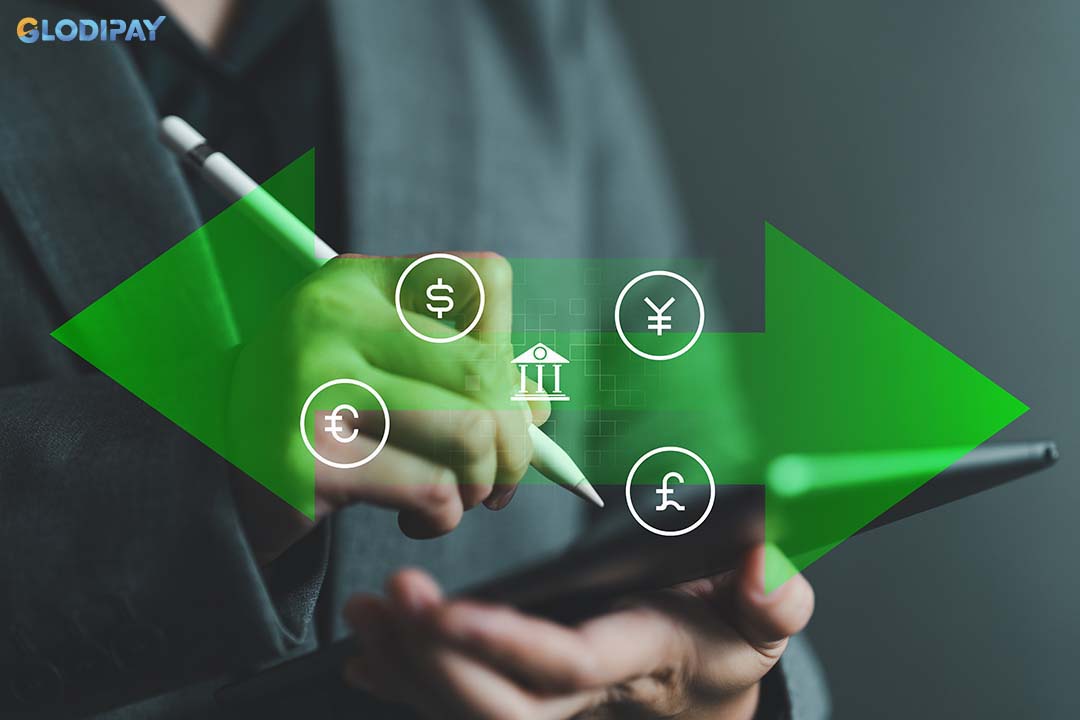
One of the biggest advantages of global payment gateways is multi-currency support
Why offshore merchant accounts matter for global businesses
Offshore merchant accounts play an increasingly important role in supporting global payment operations. These accounts allow businesses to process transactions through acquiring banks located outside their home country.
Greater flexibility for international merchants
One of the main advantages of offshore merchant accounts is greater flexibility for international merchants. Instead of depending on a single domestic banking relationship, businesses can distribute payment processing across multiple regions and acquiring partners. This approach helps maintain payment continuity, reduce dependence on a single provider, improve authorization rates, support multi-jurisdiction settlements, and simplify expansion into complex global markets. For high-risk businesses in particular, offshore merchant accounts often provide payment capabilities that traditional banks may not support.
Better regional risk management
Offshore infrastructure also improves regional risk management. Transaction behavior can vary significantly between countries, and domestic banks may sometimes classify unfamiliar international activity as suspicious, leading to unnecessary declines or restrictions. Offshore payment providers typically apply more advanced risk assessment methods, including AI-driven fraud analysis, behavioral monitoring, regional risk profiling, smart fraud filtering, and dynamic approval optimization. This creates a more balanced and scalable approach to managing international payment risk.

Offshore merchant accounts play an increasingly important role in supporting global payment operations
How compliance supports sustainable cross-border growth
Global payment processing requires strong compliance frameworks. Modern payment gateways must balance flexibility with regulatory responsibility.
Compliance is now a core payment requirement
Cross-border payment providers are required to comply with a wide range of international regulations and standards. These commonly include PCI DSS requirements for payment security, AML and KYC procedures, GDPR and global data protection rules, as well as FATF compliance standards. Businesses that fail to maintain these requirements may face payment disruptions, frozen funds, higher operational risks, or even account suspension and termination.
Ongoing monitoring is essential
Compliance also extends far beyond the initial onboarding process. In 2026, banks and payment providers continuously evaluate merchant activity, transaction behavior, and chargeback performance to identify potential risks. Businesses must actively manage fraud prevention systems, maintain chargeback control, ensure transaction transparency, verify customers appropriately, and stay aligned with regional regulations. Building long-term payment stability depends on maintaining strong trust with banks, payment providers, and regulatory authorities.
Global payment processing requires strong compliance frameworks
How GLODIPAY supports global cross-border transactions
GLODIPAY helps businesses build scalable and reliable global payment infrastructure for global growth. Designed to support both standard and high-risk industries, GLODIPAY enables merchants to process transactions across multiple regions with flexibility and security. The platform supports payments in more than 173 countries with multiple currencies and payment methods, including cards, e-wallets, and local banking solutions. This allows customers to pay with familiar options and improve transaction success rates. Using intelligent routing and real-time risk analysis, GLODIPAY helps increase approval rates while maintaining compliance with international standards. Advanced security technologies such as 3D Secure, PCI DSS compliance, tokenization, and encryption also protect sensitive data, reduce fraud risks, and create a safer checkout experience.

GLODIPAY supports global cross-border transactions with its advantages
Cross-border commerce continues to reshape the global economy, but global payments remain one of the most complex operational challenges for growing businesses. Global payment gateways and offshore merchant accounts help businesses overcome these barriers by enabling multi-currency processing, localized payment experiences, smart transaction routing, and scalable global settlements. GLODIPAY helps businesses scale internationally with greater confidence and efficiency. Contact GLODIPAY today to get the earliest support for your cross-border transactions.