

Why PCI compliance matters in 2026 has become one of the most pressing questions for businesses operating in the digital payments landscape. As transaction volumes surge and payment channels continue to diversify, the digital payments landscape has become increasingly complex. At the same time, cybercriminal tactics are growing more sophisticated, making compliance with global security standards no longer optional but foundational to survival, scalability, and trust. In 2026, PCI compliance stands at the intersection of technology, regulation, and business continuity, shaping how payment ecosystems are designed and evaluated worldwide.
Understanding PCI compliance in the modern payment era
PCI compliance refers to adherence to the requirements set forth by PCI DSS, a globally recognized framework designed to protect cardholder data throughout the payment lifecycle. Established to reduce fraud and data breaches, PCI DSS defines how sensitive payment information must be stored, processed, and transmitted.
By 2026, PCI compliance will have evolved beyond a technical checklist. It is now a dynamic security discipline influenced by cloud infrastructure, API-based payments, embedded finance, and cross-border transaction flows. Organizations that view PCI compliance merely as a regulatory burden often underestimate its role in safeguarding revenue streams and customer trust.

PCI compliance ensures secure handling of cardholder data, evolving by 2026 into a dynamic discipline that safeguards revenue, and global payment operations
Why PCI compliance matters in 2026 more than ever?
The relevance of PCI compliance has intensified dramatically in 2026 due to three converging forces:
First, global digital payments continue to grow at an unprecedented pace. Subscription models, digital platforms, and cross-border commerce have expanded the attack surface for payment data. Every additional payment method, currency, or integration point introduces new risk vectors that must be secured.
Second, regulators and card networks worldwide have increased scrutiny on data protection practices. Penalties for non-compliance now extend beyond financial fines to include operational restrictions, reputational damage, and even loss of processing privileges.
Third, consumers have become acutely aware of data security. Trust is no longer assumed, it is earned through transparent, demonstrable security practices. In this environment, PCI compliance acts as a visible signal that a business takes payment security seriously.
PCI compliance as a foundation for scalable growth
One of the most overlooked benefits of PCI compliance is its role in enabling scalability. Businesses expanding into new markets, adding payment methods, or supporting higher transaction volumes require a security framework that scales alongside growth. PCI-compliant architectures encourage:
Secure tokenization and encryption as the basis for scalable payments
One of the core reasons PCI compliance enables scalable growth lies in its emphasis on secure tokenization and encryption by default. As businesses process higher transaction volumes and expand into multiple markets, protecting sensitive cardholder data becomes exponentially more complex. PCI-compliant frameworks ensure that raw payment data is never unnecessarily exposed, replacing it with secure tokens that can be safely used across systems without increasing risk.
By minimizing the presence of sensitive data within internal environments, organizations can scale transaction processing capacity while maintaining a consistent security posture. This approach not only reduces breach exposure but also simplifies future system expansions and integrations.

PCI compliance enables scalable growth by using secure tokenization and encryption to protect sensitive data while supporting higher transaction volumes
Segmentation of payment environments to support expansion
PCI compliance strongly promotes the segmentation of payment environments, a critical principle for businesses pursuing global growth. By isolating payment systems from other operational infrastructure, organizations limit the potential impact of security incidents and reduce the overall compliance scope.
This segmentation becomes especially valuable when integrating new payment methods, entering additional markets, or working with multiple service providers. Clear boundaries between systems allow businesses to onboard new partners and deploy updates without compromising the security of core payment operations.
Reduced data exposure across systems for sustainable growth
Another often overlooked advantage of PCI compliance is its focus on reducing the exposure of sensitive data across interconnected systems. In rapidly growing payment ecosystems, data often flows through multiple platforms, APIs, and third-party services.
PCI-compliant architectures enforce strict access controls and data minimization principles, ensuring that only essential systems interact with payment data. As a result, businesses can support global payment operations, third-party integrations, and increased transaction complexity without exponentially increasing operational and security risk.

PCI compliance reduces sensitive data exposure across systems, enabling secure global operations, integrations, and complex transactions
How does PCI compliance support cross-border and multi-currency payments?
By 2026, cross-border payments will no longer be limited to large enterprises with extensive financial infrastructure. Digital platforms of all sizes, from emerging startups to established global services, routinely process transactions across multiple jurisdictions, currencies, and payment channels as part of their everyday operations.
PCI compliance provides a unified security baseline that transcends regional and regulatory differences. While local data protection laws and financial regulations may vary from market to market, PCI DSS offers a globally accepted standard recognised by acquiring banks, card networks, and payment partners worldwide. This common language of security helps businesses expand internationally with greater confidence, simplifies collaboration with new acquiring partners.
The role of PCI compliance in high-risk industries
Certain sectors, such as digital services, online education, travel platforms, and emerging technology providers, face elevated fraud and chargeback risks.
Risk mitigation through stronger security controls
For high-risk industries, PCI compliance plays a critical role in reducing exposure to data breaches, fraud, and unauthorized transactions. By enforcing strict security controls such as encryption, access management, and continuous monitoring, PCI-compliant environments significantly lower the probability of sensitive payment data being compromised. In 2026, as fraud patterns become more automated and sophisticated, these controls are essential for maintaining transaction integrity and protecting both merchants and customers from financial loss.
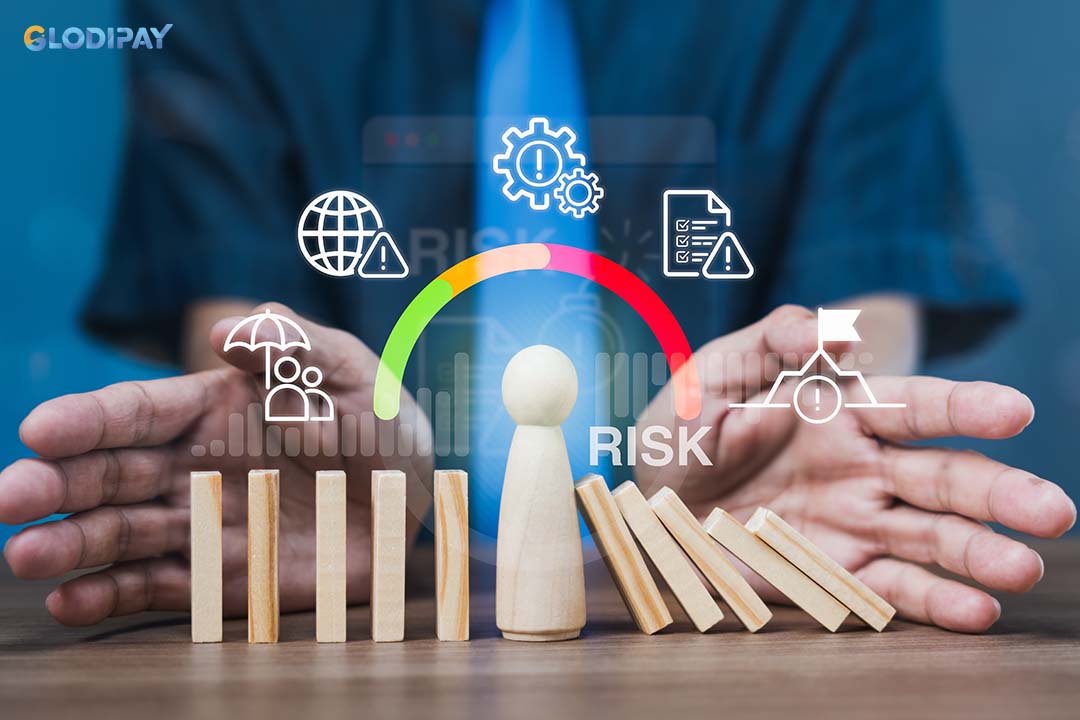
PCI compliance protects high-risk industries by reducing fraud and data breaches through strict security controls and continuous monitoring
Credibility enhancement through acquiring partners and payment stakeholders
Beyond security, PCI compliance serves as a powerful credibility signal for high-risk businesses. Demonstrating compliance reassures acquiring banks, payment stakeholders, and processing partners that risks are being actively and responsibly managed. For many high-risk industries in 2026, PCI compliance is no longer optional or merely recommended. It has become a prerequisite for accessing stable, long-term payment infrastructure and maintaining uninterrupted processing capabilities.
Technology trends reshaping PCI compliance in 2026
PCI compliance has adapted to several major technological shifts:
Cloud-native payment infrastructure
With the shift to cloud-native payment systems, PCI compliance in 2026 must evolve beyond traditional perimeter-based security. Cloud environments operate under shared responsibility models, requiring businesses to maintain continuous visibility into how payment data is processed, stored, and transmitted. Modern PCI frameworks emphasize centralized logging, real-time monitoring, and automated threat detection to keep security controls effective as cloud resources scale dynamically.
API-driven payments
The rise of API-driven payments has transformed how payment capabilities are embedded into digital platforms, marketplaces, and applications. In this context, PCI compliance places greater focus on securing API endpoints through strong authentication mechanisms, granular access controls, and strict data minimization practices. By limiting sensitive data exposure through APIs, organizations reduce compliance scope while enabling flexible integration and secure innovation.

PCI compliance secures API-driven payments by enforcing strong authentication, access controls, and data minimization for safe, flexible integrations
Automation and continuous compliance
By 2026, PCI compliance will have shifted from periodic, manual audits to automated and continuous compliance models that align with modern development cycles. Advanced monitoring tools detect misconfigurations and vulnerabilities in real time, enabling proactive risk management. This automation reflects a broader transformation in payment security: PCI compliance is no longer a static, point-in-time requirement but an ongoing process embedded into daily operations and system governance.
Enabling secure and scalable global payments with GLODIPAY
GLODIPAY operates as a global payment gateway designed to meet the demands of modern, security-conscious businesses. Built with PCI-aligned architecture at its core, the platform supports payment processing across more than 173 countries. It enables merchants to accept payments in multiple currencies through a wide range of locally preferred and international payment methods. This global reach allows businesses to scale internationally while maintaining consistent security standards.
Beyond geographic coverage, the platform emphasizes rapid KYB approval processes, allowing businesses to onboard efficiently without compromising compliance standards. It offers robust 3D Secure protection to reduce fraud and unauthorised transactions, particularly valuable for high-risk industries such as AI platforms, travel services, and e-learning providers. By combining PCI-driven security practices with specialized risk management capabilities, GLODIPAY empowers merchants to grow confidently in complex, high-volume digital payment environments.

GLODIPAY is a PCI-aligned global payment gateway supporting 173+ countries, multi-currency transactions, 3D Secure, and secure growth for high-risk industries
Why PCI compliance matters in 2026 goes far beyond meeting regulatory requirements. It is about safeguarding the core of digital commerce in an environment defined by rapid scale, complex payment flows, and persistent cyber threats. As payment ecosystems become more interconnected, PCI compliance enables secure growth, operational resilience, and global trust. Businesses that embed compliance into their payment architecture are better equipped to adapt, innovate, and grow sustainably. For those seeking a PCI-aligned, global-ready payment infrastructure, contact GLODIPAY is a strategic step toward secure and scalable growth.