

Video streaming market forecast 2026 suggests that the global digital entertainment industry is entering a new phase of rapid expansion. As streaming platforms compete globally, managing subscriptions, cross-border transactions, and secure payments is becoming a key factor for long-term growth. Across entertainment, live sports, e-learning, and AI-generated media, streaming content has become a powerful global digital economy. However, beyond content, algorithms, and streaming technology, payment infrastructure is emerging as a crucial driver of monetization.
Global video streaming market forecast for 2026
The video streaming industry has transformed dramatically over the past decade. What started as a convenient alternative to traditional television has now become one of the largest segments of the global digital economy.
Market research indicates that the global video streaming industry will continue to grow rapidly throughout the coming decade. The market is estimated to reach approximately USD 277 billion in 2026 and could expand to nearly USD 886 billion by 2036, demonstrating strong long-term demand for online video consumption. Several macro-level trends drive this growth:
Increasing global internet penetration
Rising adoption of smart devices
Improvements in cloud computing and streaming infrastructure
The expansion of subscription-based and ad-supported business models
Growth of digital entertainment ecosystems
The industry’s compound annual growth rate is expected to remain in double digits, reflecting the massive demand for digital video content worldwide. However, scaling a streaming platform globally requires more than high-quality content and technology. Monetization systems must be capable of handling millions of transactions across borders, currencies, and payment methods.
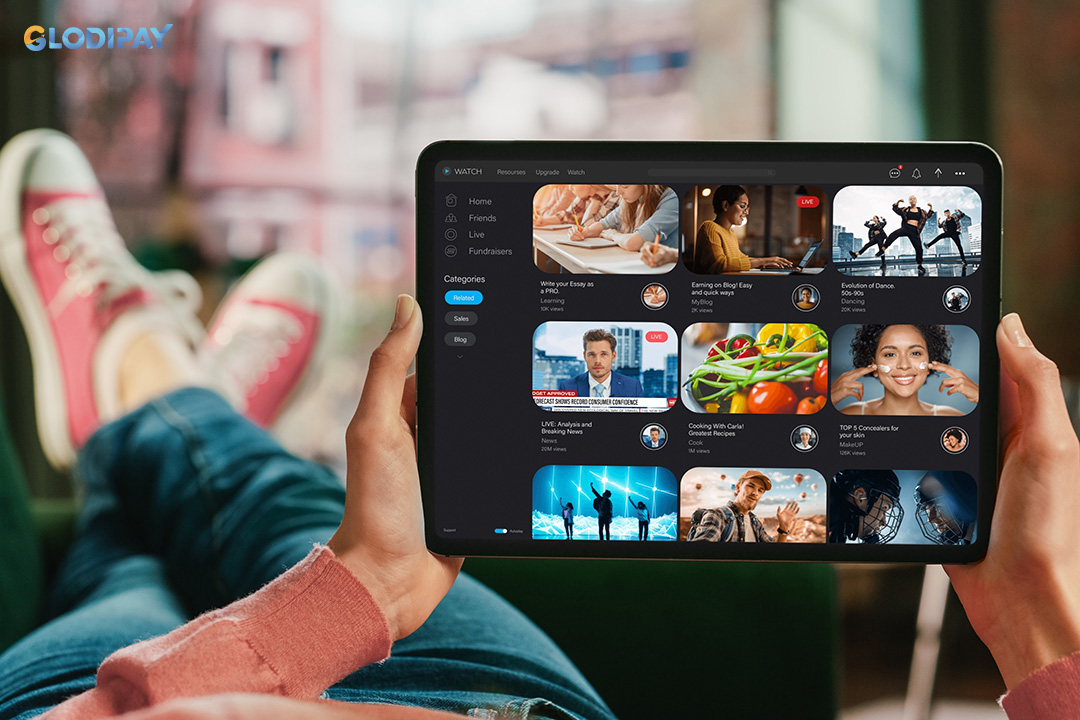
The global video streaming market is projected to grow rapidly, driven by rising internet access, smart device adoption, and evolving digital monetization models
Key drivers accelerating the streaming economy
Several key factors are accelerating the growth of the global streaming economy. It's shaping how platforms expand their audiences and monetize digital content.
Rising global demand for on-demand content
Consumers today expect instant access to entertainment, and the shift from scheduled broadcasting to on-demand viewing has fundamentally transformed how media is consumed. Streaming platforms offer flexible viewing schedules, access across multiple devices and extensive content libraries, thereby creating a more convenient experience for users. As a result, audiences are increasingly shifting away from traditional broadcast media and toward streaming services.
Expansion of smart devices and mobile viewing
The widespread availability of smartphones, smart TVs, tablets, and other connected devices has made streaming accessible almost anywhere. With billions of mobile devices in use globally, video streaming platforms can now reach audiences across nearly every region. Mobile viewing, in particular, is reshaping the industry by driving demand for short-form content, live streaming events, vertical video formats, and deeper integration with social media platforms.

The rapid growth of smartphones and connected devices has made video streaming more accessible worldwide, driving new viewing behaviors and content formats
Emergence of new streaming verticals
The video streaming industry is no longer limited to entertainment. Several sectors are now adopting streaming as a core digital service:
E-learning platforms: Online education increasingly relies on live and on-demand video courses.
Corporate training: Companies use streaming technology for global workforce training programs.
Gaming and esports: Live streaming platforms enable global participation in competitive gaming events.
AI-generated media: Artificial intelligence tools are enabling automated content creation and personalized video experiences. These emerging verticals are expanding the scope of the streaming economy beyond traditional entertainment.
Monetization models driving the streaming industry
One of the most significant developments in the streaming ecosystem is the diversification of revenue models. Today’s platforms rely on a combination of monetization strategies to generate sustainable revenue.
Subscription-based streaming (SVOD): Subscription video-on-demand remains one of the dominant revenue models. Users pay a monthly or annual fee for unlimited access to a content library. This model offers predictable revenue streams for streaming providers and allows them to invest heavily in original content production.
Advertising-supported streaming (AVOD): Advertising-supported streaming has gained significant popularity as a free alternative for viewers. Instead of paying a subscription fee, users watch content supported by targeted advertisements. Advertisers benefit from advanced audience targeting and analytics capabilities.
Transactional streaming (TVOD): Transactional streaming allows users to purchase or rent individual pieces of content such as movies, concerts, or sports events. This model is commonly used for premium releases and live event broadcasts.
Hybrid monetization models: Many streaming platforms now combine multiple revenue models, such as subscription tiers with ads, premium pay-per-view content, and freemium access. These hybrid strategies help platforms reach different audience segments, but they all depend on reliable and scalable payment infrastructure.
Streaming platforms are diversifying revenue through subscription, advertising, transactional, and hybrid models to build sustainable monetization strategies
Why are payments becoming the backbone of streaming platforms?
As the streaming economy grows globally, payment infrastructure is becoming a strategic technology layer rather than just a financial tool. Several challenges make payment systems particularly important in the streaming industry.
Global subscriber management
Streaming platforms often serve audiences across dozens or even hundreds of countries, creating complex operational challenges. They must manage currency conversions, process cross-border transactions, comply with international financial regulations, and support diverse local payment methods. Without a flexible payment infrastructure capable of handling these requirements, it becomes difficult for platforms to scale effectively on a global level.
Subscription billing and recurring payments
Subscription services rely on automated recurring billing systems that can manage millions of users at the same time. These systems must handle monthly renewals, free trials and promotional pricing, account upgrades or downgrades, as well as failed payments and recovery processes. Effective subscription management is therefore essential for maintaining user retention and ensuring stable, predictable revenue.

Subscription services depend on automated recurring billing systems to manage renewals and payment recovery while maintaining stable revenue and user retention
Fraud prevention and payment security
Digital content services are often targeted by fraud and account abuse, making payment security a critical priority for streaming platforms. To protect both businesses and users, platforms must implement secure payment mechanisms such as encryption protocols, fraud detection algorithms and strong authentication processes. Without a robust security infrastructure, streaming platforms risk financial losses as well as serious reputational damage.
Supporting diverse payment preferences
Different regions have distinct payment habits. Some audiences prefer credit cards, while others rely on digital wallets, bank transfers, or local payment systems. For streaming platforms operating globally, supporting a wide variety of payment methods is essential to maximize subscriber conversions.
Hidden infrastructure behind streaming monetization
While viewers focus on content quality and user experience, a complex financial infrastructure operates behind the scenes. Modern streaming platforms must integrate multiple technological systems to support monetization, including:
Payment gateways: These systems process digital transactions and connect streaming platforms with global financial networks.
Subscription management platforms: They automate recurring billing, manage user accounts, and handle subscription lifecycle events.
Fraud detection systems: Advanced algorithms monitor transactions in real time to identify suspicious activity.
Compliance and regulatory tools: Global payment operations require compliance with various financial regulations and security standards.
Behind the streaming experience, platforms rely on complex financial infrastructure to support global monetisation
Payment challenges for high-growth streaming businesses
Streaming businesses face unique payment challenges due to their global and digital-first nature. Some of the most common challenges include:
Cross-border payment complexity: International transactions involve multiple currencies, banking networks, and regulations.
High transaction volumes: Large streaming platforms may process millions of microtransactions daily.
High-risk industry classification: Certain streaming verticals, such as digital media, online education, and AI platforms, may be categorized as higher-risk by financial institutions.
Chargebacks and subscription disputes: Recurring payments can increase the likelihood of disputes or chargebacks. Addressing these challenges requires specialized payment solutions capable of supporting high-growth digital businesses.
The future of streaming platforms depends on payment innovation
As competition in the streaming industry intensifies, platforms will increasingly differentiate themselves not only through content but also through monetization efficiency. Future trends in streaming payments may include:
AI-driven fraud detection systems
Real-time global payment processing
Advanced subscription analytics
Flexible billing models for global audiences
Seamless integration with digital ecosystems
Payment technology will therefore become a strategic enabler for the next generation of streaming platforms. Companies that invest in scalable payment infrastructure today will be better positioned to capture the rapidly expanding global streaming market.

As competition grows, payment technology and efficient monetization systems will become key differentiators for the next generation of global streaming platforms
GLODIPAY - A global payment gateway for your business
Video streaming market forecast 2026 clearly shows that payment infrastructure will play an increasingly important role in enabling streaming platforms to scale internationally. One payment solution designed to support global digital businesses is GLODIPAY, a global payment gateway built to handle the complexity of modern online services.
GLODIPAY supports businesses operating across more than 173 countries, enabling companies to accept payments from users around the world through a single integrated system. The platform provides multi-currency processing and multiple payment methods, allowing streaming platforms and digital services to deliver localized payment experiences for global audiences. Its infrastructure is designed to simplify cross-border transactions while maintaining efficient payment processing for high-volume digital platforms.
In addition to its global capabilities, GLODIPAY supports KYB business verification, helping companies onboard and start accepting payments through a streamlined process. The gateway is particularly well-suited for high-risk digital industries, including AI services, travel platforms, and e-learning businesses. Advanced security features such as 3D Secure authentication help protect transactions and reduce fraud risks, providing an additional layer of trust for both merchants and customers.

GLODIPAY provides a global payment infrastructure that helps digital platforms process cross-border transactions and operate securely across more than 173 countries
Video streaming market forecast 2026 highlights a rapidly expanding digital ecosystem where content, technology, and monetization strategies must evolve together. While content and streaming technology attract audiences, long-term success increasingly depends on reliable and scalable payment infrastructure. As the streaming economy grows into a trillion-dollar industry, payment gateways that support global transactions and strong security standards will become increasingly important. These capabilities will be essential for digital platforms seeking sustainable global growth. Contact GLODIPAY to explore suitable global payment solutions.